Research & Insight

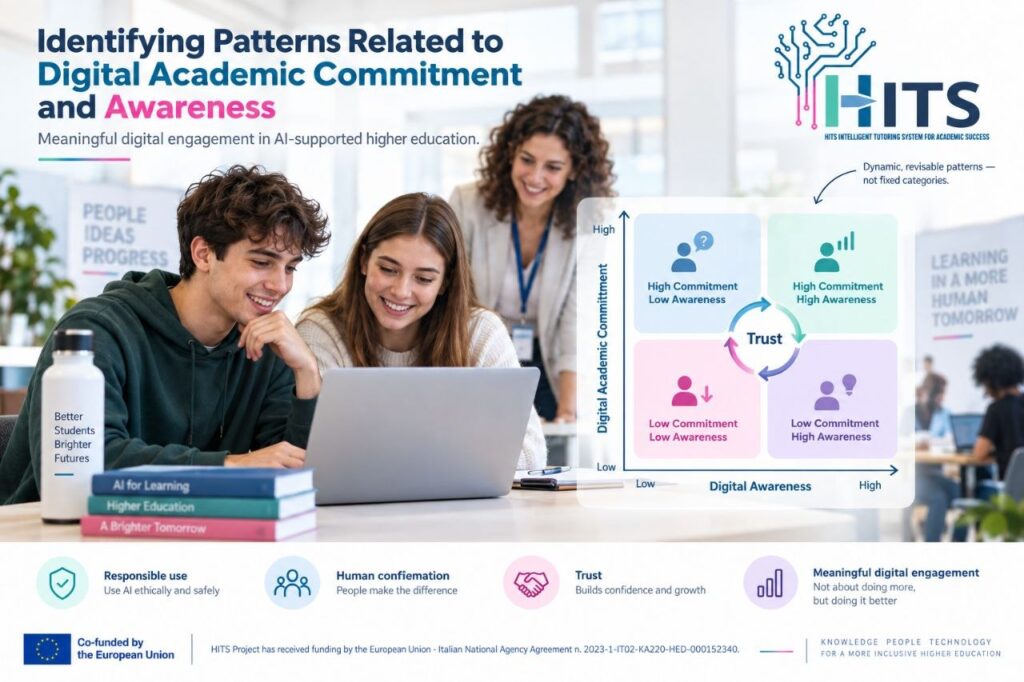
Identifying Patterns Related to Digital Academic Commitment and Awareness

What does meaningful digital engagement really look like? In AI-supported higher education, simply logging in, clicking on resources or using a chatbot does not necessarily mean that a student is meaningfully engaged. Deliverable 5.2 of the HITS Project explores how digital academic engagement can be understood through two complementary dimensions: Digital Academic Commitment and Digital […]

Identifying Patterns Related to Digital Academic Commitment and Awareness Read More »

Defining similarity and styles in achieving learning objectives and in tutoring

What if effective AI tutoring started by understanding how students actually learn? This fundamental question drives Deliverable 5.1 of the HITS Project, which explores the analytical and strategic foundations of the HITS chatbot, demonstrating how understanding academic engagement patterns can lead to more meaningful and personalized support. From Theory to Profiles: The Foundations of the

Defining similarity and styles in achieving learning objectives and in tutoring Read More »

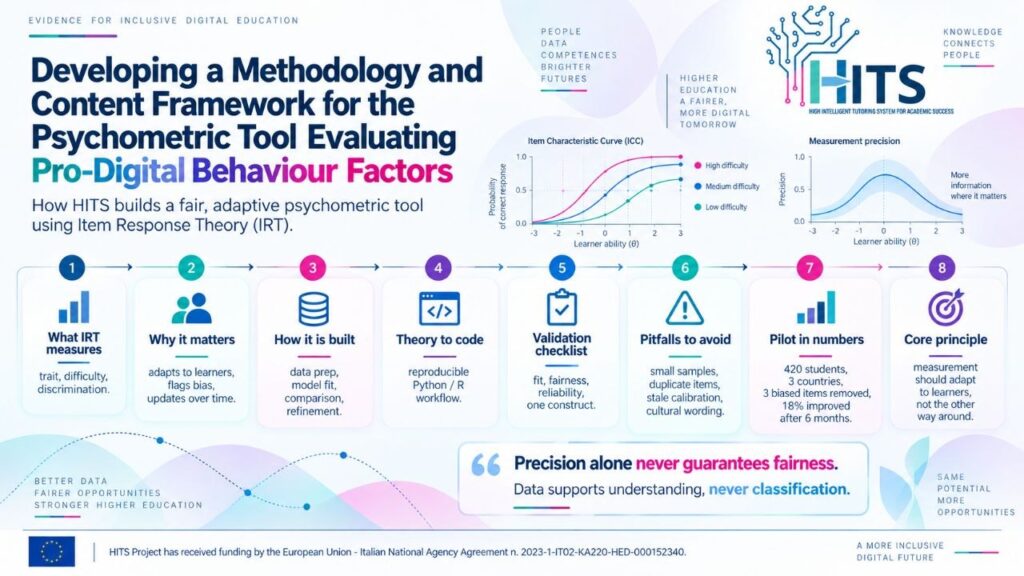
Developing a Methodology and Content Framework for the Psychometric Tool Evaluating Pro-Digital Behaviour Factors

How do you build a testing tool that’s fair for every learner – not just accurate on average? We asked the statistics to answer. Deliverable T4.3 of the HITS Project lays out the methodology behind the HITS psychometric tool, built on Item Response Theory (IRT). Instead of relying on a single reliability score, the model

Developing a Methodology and Content Framework for the Psychometric Tool Evaluating Pro-Digital Behaviour Factors Read More »

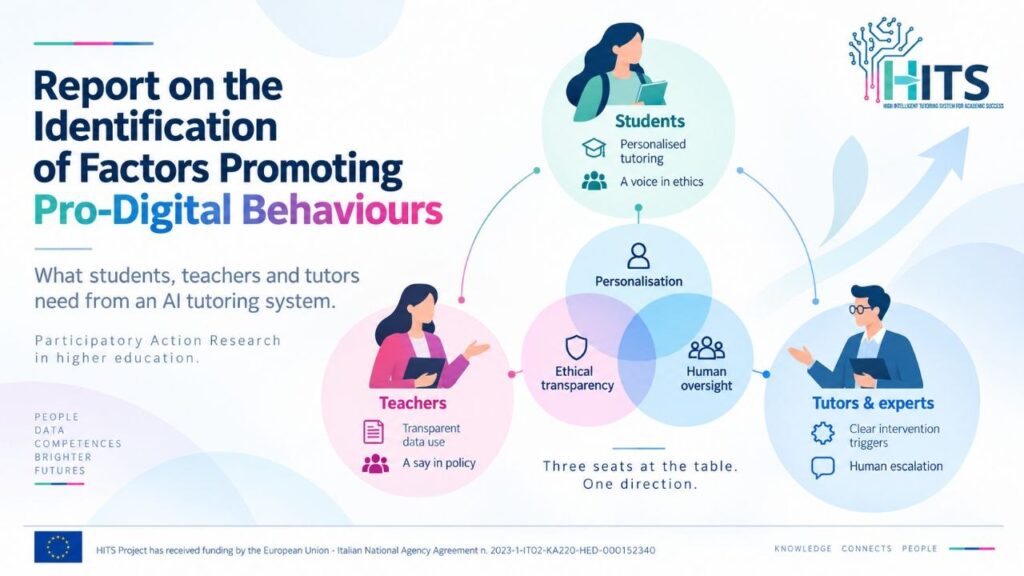
Report on the Identification of Factors Promoting Pro-Digital Behaviours

What do students, teachers and tutors actually need from an AI tutoring system? We asked them directly. Deliverable T4.2 of the HITS Project reports on a Participatory Action Research study exploring the factors that promote, or hinder, pro-digital behaviours in higher education. Instead of only measuring technology use, the research listened to the people who

Report on the Identification of Factors Promoting Pro-Digital Behaviours Read More »

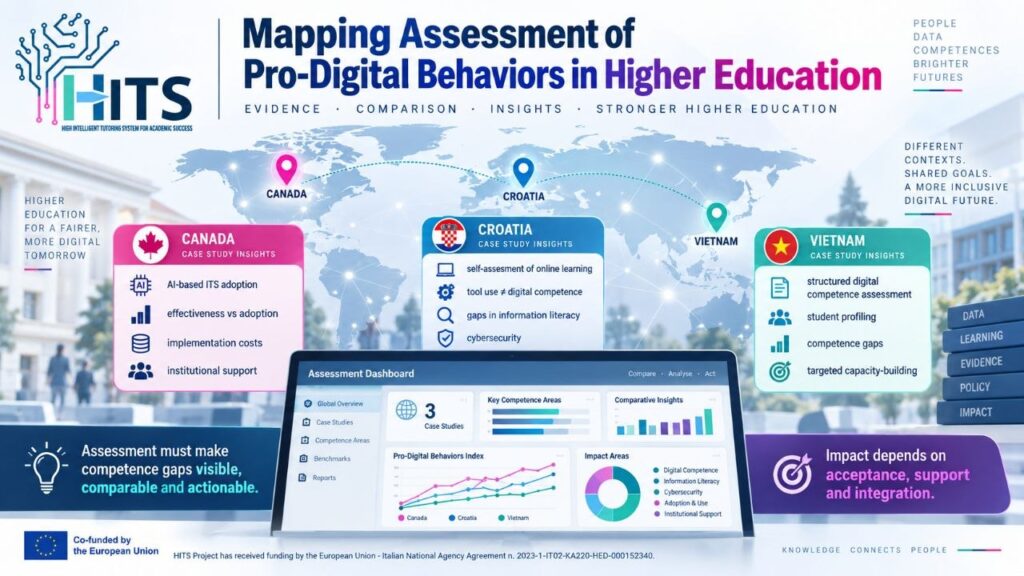
Mapping Assessment of Pro-Digital Behaviors in Higher Education

Partners of the HITS Project developed an 𝐚𝐧𝐚𝐥𝐲𝐭𝐢𝐜𝐚𝐥 𝐜𝐚𝐬𝐞 𝐬𝐭𝐮𝐝𝐢𝐞𝐬 𝐚𝐢𝐦𝐞𝐝 𝐚𝐭 𝐮𝐧𝐝𝐞𝐫𝐬𝐭𝐚𝐧𝐝𝐢𝐧𝐠 𝐡𝐨𝐰 𝐝𝐢𝐠𝐢𝐭𝐚𝐥 𝐚𝐬𝐬𝐞𝐬𝐬𝐦𝐞𝐧𝐭 𝐭𝐨𝐨𝐥𝐬 𝐚𝐫𝐞 𝐮𝐬𝐞𝐝, and what they actually measure, in higher education contexts. Here follows some of the most relevant cases emerged thanks to this research. 𝗖𝗮𝘀𝗲 𝘀𝘁𝘂𝗱𝘆 𝗳𝗿𝗼𝗺 𝗩𝗶𝗲𝘁𝗻𝗮𝗺 This study tested a multi-criteria assessment model designed to evaluate digital

Mapping Assessment of Pro-Digital Behaviors in Higher Education Read More »

Chapter 6 – Mapping and evaluating existing impact assessment methods and tools

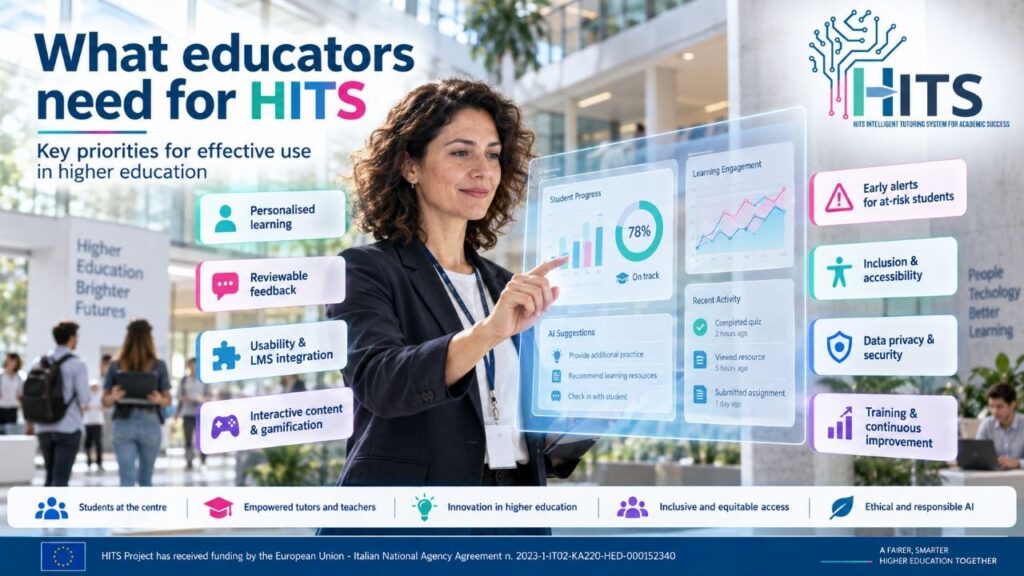
𝐖𝐡𝐚𝐭 𝐝𝐨 𝐞𝐝𝐮𝐜𝐚𝐭𝐨𝐫𝐬 𝐚𝐧𝐝 𝐚𝐜𝐚𝐝𝐞𝐦𝐢𝐜 𝐬𝐭𝐚𝐟𝐟 𝐧𝐞𝐞𝐝 𝐟𝐨𝐫 𝐇𝐈𝐓𝐒 𝐭𝐨 𝐰𝐨𝐫𝐤 𝐢𝐧 𝐡𝐢𝐠𝐡𝐞𝐫 𝐞𝐝𝐮𝐜𝐚𝐭𝐢𝐨𝐧? Successful integration of High Intelligent Tutoring Systems (HITS) in academic environments requires clear priorities to ensure effective, sustainable use. Based on recent scientific literature, 𝐂𝐡𝐚𝐩𝐭𝐞𝐫 𝟔 of the HITS WP3 Handbook 𝐬𝐮𝐦𝐦𝐚𝐫𝐢𝐬𝐞𝐬 𝐭𝐡𝐞 𝐤𝐞𝐲 𝐧𝐞𝐞𝐝𝐬 𝐨𝐟 𝐞𝐝𝐮𝐜𝐚𝐭𝐨𝐫𝐬 𝐚𝐧𝐝 𝐚𝐜𝐚𝐝𝐞𝐦𝐢𝐜 𝐬𝐭𝐚𝐟𝐟. 𝐏𝐞𝐫𝐬𝐨𝐧𝐚𝐥𝐢𝐬𝐞𝐝 𝐥𝐞𝐚𝐫𝐧𝐢𝐧𝐠 pathways

Chapter 6 – Mapping and evaluating existing impact assessment methods and tools Read More »

What Do the Experts Say About Intelligent Tutoring Systems

Chapter 5 Is Out: What Do the Experts Say About Intelligent Tutoring Systems?

As the HITS project continues to explore the integration of Artificial Intelligence in Higher Education, Chapter 5 of our Handbook offers an in-depth look into what students, educators, and mentoring experts really think about Intelligent Tutoring Systems (ITS). Based on participatory research involving over 500 participants from 64 universities across Europe, this chapter brings together

Chapter 5 Is Out: What Do the Experts Say About Intelligent Tutoring Systems? Read More »

AI in higher education

Chapter 4: Ethical challenges of using AI in higher education

The introduction of Intelligent Tutoring Systems (ITS) into the educational sphere raises significant ethical challenges, particularly regarding algorithmic transparency. Many AI systems operate as “black boxes,” obscuring how decisions are made and leading to concerns about trust among users. This lack of clarity can exacerbate existing inequalities in access to educational resources. It is essential

Chapter 4: Ethical challenges of using AI in higher education Read More »

data collection

Data collection is open!

A new phase of the project is on!  Students, experts in tutoring services and academic staff are invited to take part in a short survey that investigates two main things:  – What predicts academic success? How can we support students in their career development? What can tutoring services do? – Which digital tools are now used

Data collection is open! Read More »

Chapter 3: AI regulations in higher education

With the increasing integration of artificial intelligence in universities, the necessity for effective regulation becomes paramount. International organizations such as UNESCO and the OECD are proactively working to develop guidelines that ensure ethical and responsible AI usage in educational contexts. These regulations tackle pressing issues like student data privacy, algorithmic accountability, and equitable access to

Chapter 3: AI regulations in higher education Read More »

intelligent tutoring systems

Chapter 2: How to implement intelligent tutoring systems in higher education?

The implementation of Intelligent Tutoring Systems (ITS) within European universities is fundamentally reshaping the way students engage with learning materials. These innovative systems provide tailored educational content while actively working to mitigate dropout rates through timely interventions for at-risk students. Utilizing predictive analytics, ITS can identify early warning signs of academic struggle, enabling educators to

Chapter 2: How to implement intelligent tutoring systems in higher education? Read More »

Intelligent Tutoring Systems

Chapter 1: What are intelligent tutoring systems?

In recent years, Intelligent Tutoring Systems (ITS) have dramatically transformed the educational landscape. These AI-driven tools are specifically designed to provide personalized learning experiences, adjusting in real-time to cater to each student’s unique needs. By harnessing advanced technologies such as data analytics and machine learning, ITS can meticulously monitor student performance, allowing educators to identify

Chapter 1: What are intelligent tutoring systems? Read More »

meeting on features of HITS platform

Imagining the HITS platform: first project meeting brainstorming

During the first project meeting in Bucharest (RO), the Consortium started a fertile brainstorming on the features and functionalities of the HITS platform. Guided by Giordano Sanchioni from Pluriversum, the Consortium has worked to define the MUST-HAVE elements and the risks for a digital platform for students’ support in Higher Education. We are collecting views

Imagining the HITS platform: first project meeting brainstorming Read More »

AI in higher education

The HITS handbook: a European perspective on the use of AI in Higher Education to improve students’ support

The project Consortium has started a thorough desk research to investigate pros and cons of the use of AI in higher education. With a European research team, good practices, theoretical and methodological approaches together with European regulations are being investigated. The book consists of 6 chapters. The last one will arrive in autumn to present

The HITS handbook: a European perspective on the use of AI in Higher Education to improve students’ support Read More »

Scroll to Top